Four decades shaping development policy across India and 38 countries — at the intersection of innovation economics, public finance, and trade.
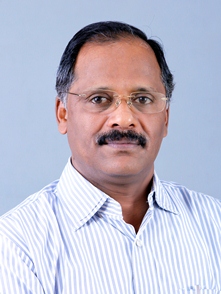
Across four decades of research, teaching, and institutional leadership, Prof. Joseph's work has coalesced into five interlocking fields — each grounded in rigorous scholarship and oriented toward real-world impact.
“The challenge for development economists is not merely to describe inequality — it is to understand the institutional architectures that produce it, and to imagine the ones that might dissolve it.”
Towards Inclusive Finance in India: A Comparative Analysis of Achievements, Disparities, and Implications
with Lekshmi Prasad & Kiran Kumar Kakarlapudi · Economic and Political Weekly, 59(48)
In Search of a More Innovative Innovation Index for India
with K.K. Kakarlapudi · Economic & Political Weekly, 58(29)
Innovation and Firm Performance in Informal Manufacturing Enterprises: Evidence from India
with Chandra Shekar K. & Beena P L · Economic and Political Weekly, 49(3)
India's GST Paradigm and the Trajectory of Fiscal Federalism
with L.A. Kumary · The Indian Economic Journal, 71(1)
Since 2019, Prof. Joseph has led a comprehensive institutional transformation at GIFT — establishing India's only PhD programme with a dedicated public finance focus, building a multidisciplinary faculty, and producing over 25 policy reports directly informing the Government of Kerala.
Under his leadership, GIFT hosted the landmark 20th Anniversary GLOBELICS Conference (54 countries) and the international conference 'Rethinking Indian Public Finance for New Development Challenges' (300+ participants, 44 eminent scholars).
He founded Kerala Economy, a unique bilingual quarterly journal bridging academic research with public discourse for legislators, officials, media, and citizens.
From the UN Commission on Science and Technology in Manila to the Africa Innovation Summit in Kigali — a career of genuine global engagement.
View all engagements →Prof. Joseph welcomes invitations for keynote lectures, policy consultations, research collaborations, media engagements, and editorial discussions.